
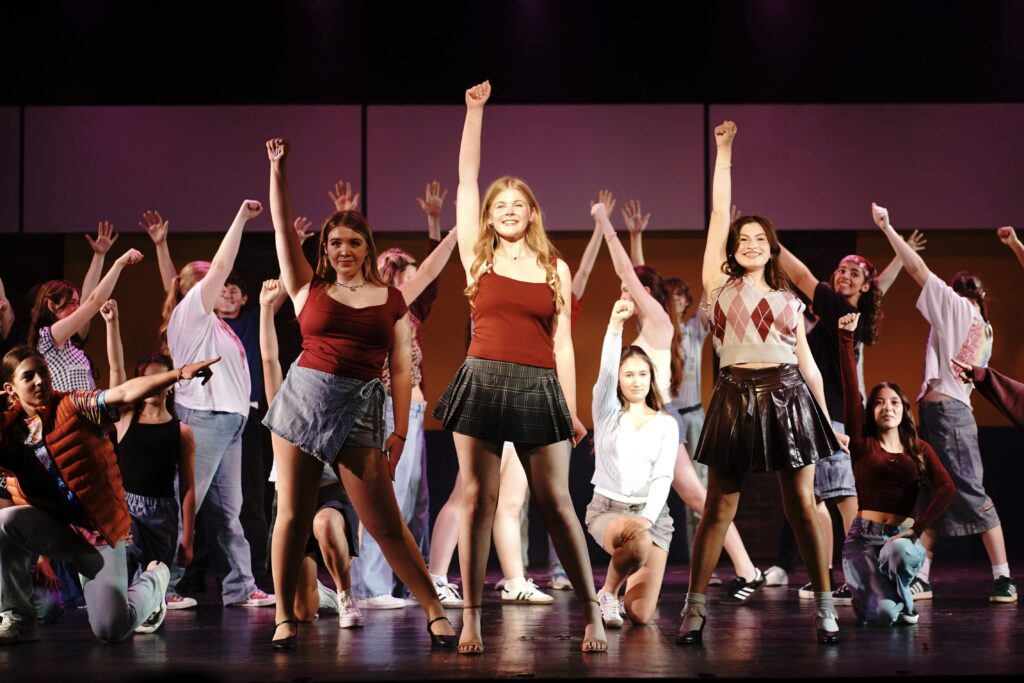
The skills built onstage don’t stay there
When people think about community theatre for kids, and we’re not only talking about those in
Scottsdale or the Phoenix Valley, they often picture the final bow: bright lights, applause, proud
smiles. But the most meaningful lessons don’t happen under the spotlight. They happen in the
backstage rehearsals, in problem-solving moments, in learning how to work with others, and in
showing up – even when it’s hard.
That’s what we believe. Scratch that. That’s what we KNOW! And we’ve got research that
confirms what families and educators have long observed: participation in community theatre
builds life skills that last well beyond childhood (psst… it works for adults, too!).
Confidence that carries forward
Standing onstage teaches kids something powerful: their voice matters. Studies from
Americans for the Arts and the National Endowment for the Arts show that students involved in
theatre and arts programs demonstrate increased:
- Self-confidence
- Comfort with public speaking
- Willingness to take healthy risks
This confidence doesn’t disappear when the curtain closes. It shows up later in classrooms, job
interviews, presentations, and leadership roles. Doesn’t that sound like something we all want
for our kids? For our community?
Communication and collaboration – practiced in real time
Did you know that theatre is a team sport? Kids learn quickly that no one succeeds alone. They
have to:
- Listen carefully
- Communicate clearly
- Adjust when things don’t go as planned
- Support peers of different ages and personalities and ethnicities
Sound like something all adults need as well!?
According to research published in the Journal of Educational Psychology, drama participation
strengthens perspective-taking and emotional regulation – essential skills for teamwork in adult
life. That’s why community theatre is especially effective because it mirrors real-world
environments, where collaboration across age groups and experience levels is the norm.
Empathy you can’t teach from a textbook
When kids, teens, and adults step into a character’s shoes, they practice seeing the world
through someone else’s eyes.
Research from the Harvard Graduate School of Education highlights that arts participation helps
young people:
- Develop empathy
- Understand complex emotions
- Navigate conflict more thoughtfully
Yes! You’re right! These ARE foundational skills for healthy relationships, civic engagement,
and leadership – ONSTAGE AND OFF.
Resilience, responsibility, and follow-through
Have you heard that buzz word ‘resiliency’ that’s been floating around these past years? We’ve
got that covered, too! Theatre teaches commitment – and kids (adults, too) learn to:
- Show up consistently
- Prepare even when motivation dips
- Recover from mistakes
- Finish what they start
Longitudinal data from the National Endowment for the Arts links sustained arts participation to
higher graduation rates, college attendance, and ongoing community involvement. In other
words, theatre builds follow-through – a skill that pays dividends for a lifetime. What an
investment!
Belonging during critical years
For so many kids, theatre is where they feel most accepted. And we do everything we can to
create an ecosystem of acceptance and inclusion. It’s not unusual for you to hear our Artistic
Director, Moe, echo that ethos at every turn. Post-pandemic research shows that students
involved in arts programs report:
- Lower feelings of isolation
- Higher sense of belonging
- Stronger peer relationships
Community-based theatre is particularly impactful because it provides consistent adult
mentorship, peer support, and a safe space to grow – especially for shy, neurodivergent, or
socially anxious kids. They get to grow side-by-side with the confident, extrovert, and know-no-
fear kids. And everyone develops invaluable good-human skills from that.
Why this matters to our community
Community theatre isn’t just about creating performers (although it’s pretty cool to watch that
happen!). It’s about developing:
- Confident communicators
- Collaborative teammates
- Empathetic leaders
- Engaged future citizens
REPEAT THOSE OUT LOUD. Who among us doesn’t want that for our kids? For our
community? But these outcomes don’t just happen overnight. They’re built slowly, through
repetition, trust, and consistency.
One final thought: the lessons last long after the final bow
We know that theatre teaches kids how to speak up, listen well, work together, and care deeply.
And those lessons don’t fade with time. They show up in adulthood – in classrooms,
workplaces, families, and communities.
And that may be the most meaningful performance of all.